
On January 26, the American Housing Corporation marked its public launch with an open-house of a prototype four-bedroom, two-and-a-half-bathroom row home that they'd assembled next to their small factory in Austin, Texas – in just two weeks.
In the months since, images and stories from the event have attracted an avalanche of attention on social media beyond the AHC team's wildest expectations. Real estate Twitter/X, mainstream media outlets like Fast Company and The Free Press, and even captivated laypeople all wanted to know how this little startup pulled off such an impressive opening act.
The answer is simple: the AHC builds homes using prefabricated panels.
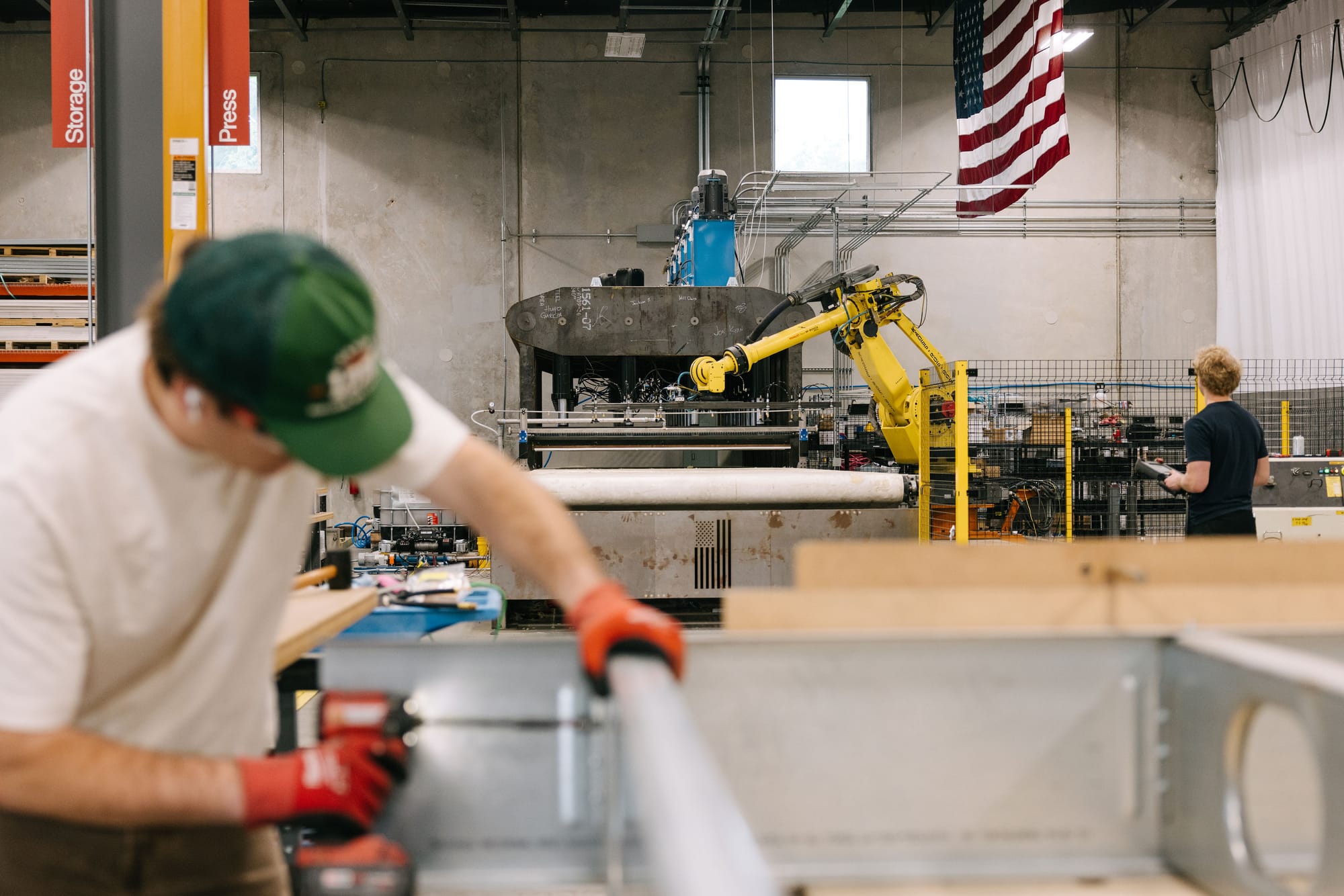
Their standard wall panels, made of fiberglass-reinforced concrete, are up to 20 feet long, nine feet tall, and well over a thousand pounds. Specialized panels, like those for kitchens, come with amenities like ovens and cabinets bolted in as well. Even using highly automated manufacturing processes, it still takes a few weeks to build them. Once they're ready though, the team uses a crane to rapidly drop the panels onto a foundation. As they fall in place, the panels snap together, no tools needed. The process feels industrial-gritty yet also oddly futuristic. And the Corporation claims the process will only get faster, sturdier, more impressive with each coming day.
It's a compelling process. So AHC co-founder Bobby Fijan gets why investors and reporters want to talk about it.
But it's not what animates him. It's not the reason he and his colleagues launched the AHC. And it's certainly not what he wants prospective homebuyers to think about when they tour an AHC row home in their neighborhood, he stressed to GPLetters.
For Fijan, the AHC is the culmination of a long quest to solve a sticky socio-economic problem: How can developers build housing in America's urban cores that gives young couples what they need to start a family there instead of fleeing to suburbs and small towns, while still turning a tidy profit?
The hunt for solutions to that riddle led Fijan and his colleagues to a clever new approach to prefabricated housing. Their strategy could finally deliver the substantial cost savings and investor returns promoters have long insisted prefabrication could deliver, yet struggled to realize. But Fijan's path towards the innovations at the heart of the AHC was not straight and simple.
Nor is the Corporation's path forward.
While the AHC already has a solid, beautiful prototype on the ground and several more homes in development, the long-term viability of the company's model ultimately hinges on the outcome of several bets Fijan and his colleagues have placed: On the future of housing regulations. On the contours of consumer demand. And most importantly, on their ability to respond to a slew of logistical challenges barreling towards them as they scale up.