
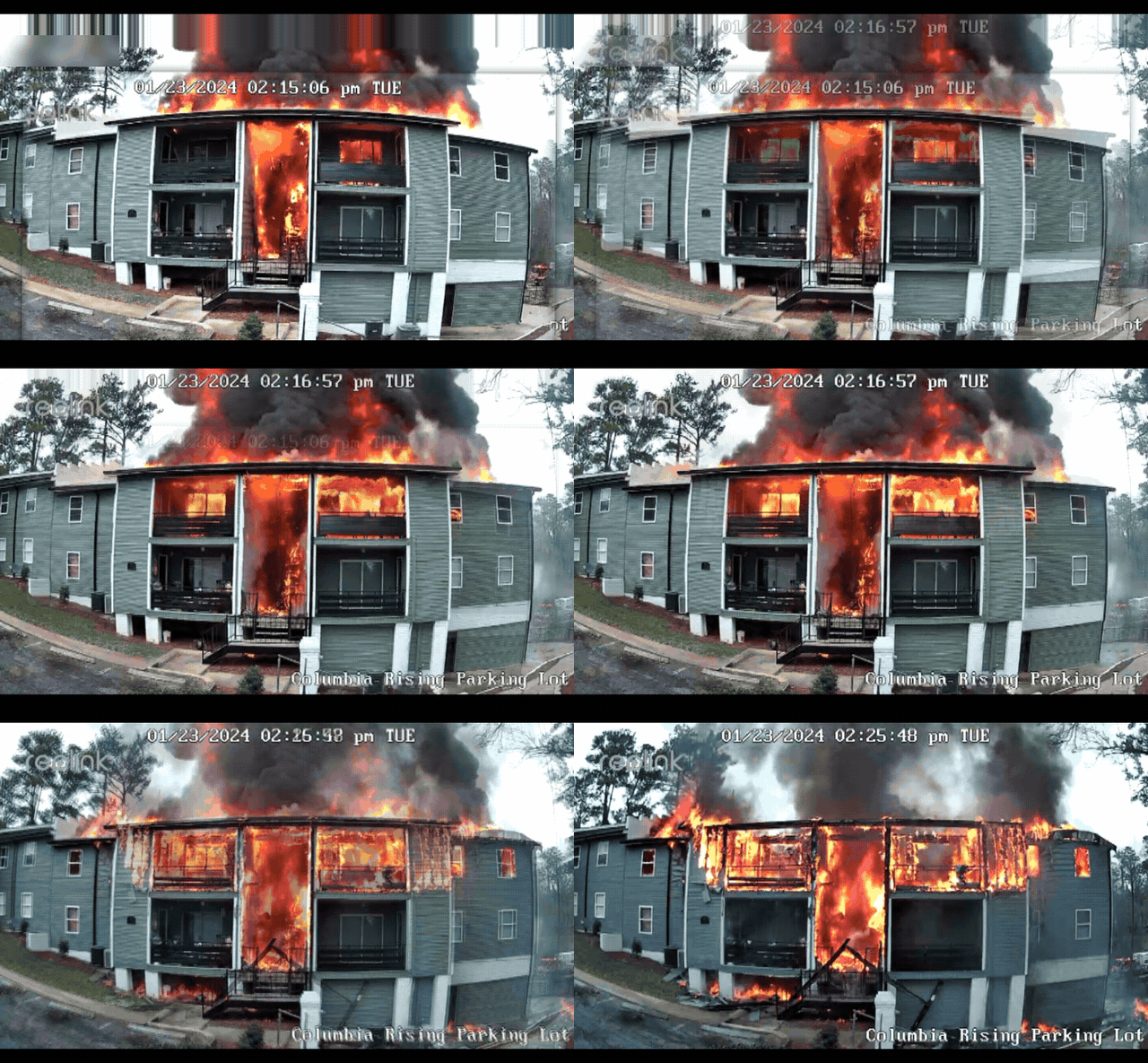
"Hey," Rachael Jones' go-to handyman said when she picked up his call one random Tuesday afternoon. "The property's on fire."
He was taking care of a work order at Columbia Rising, a 29-unit apartment building she'd purchased in Columbia, South Carolina a little over six months prior. She'd just taken over management of the complex outright three weeks before the call, on January 1st, 2024.
And now it was burning.
Jones took a beat to process this sudden curveball, then turned to her computer and pulled up the live feed from an on-site security camera and saw a plume of flame ripping through the stairwell separating four units within the two-story building.
Immediately, her mind went into overdrive, ticking through all the problems this disaster had suddenly dumped on her plate: The fire department was already on the scene. But what should she be doing right now to respond to this emergency? She'd need to call in her fire insurance policy at some point. What could she do now to prepare for that, and when should she make the call? She should definitely get down there ASAP. But it was 2 pm. Her kids would be out of school within a half hour and her husband was out of town. What should she do with them?
"I'm a glutton for punishment...I've always run towards the fire instead of away from it."
Thus began a three-day grind of sudden complications and on-the-spot problem solving, itself merely the prelude to a long saga of insurance wrangling and rebuilding. But this wasn't the only crisis Jones faced that year. Nine months later, a hurricane caused a freak flood, inundating another multifamily complex she'd recently acquired, this one in Mount Holly, North Carolina. The waters climbed so high that at least two of her tenants had to use a kayak to reach their unit. Yet Jones survived both of these disasters undaunted – maybe even eager for more.
"I'm a glutton for punishment," she told GPLetters. "I've always run towards the fire instead of away from it." (Quite literally in this instance.) Some of that comes down to the adrenaline rush she gets when dealing with a crisis. But much of it comes down to Jones' secret sauce: her analytic mind. "I don't want bad things to happen," she explained. But when they do, "I'm always like, 'That's a fun problem. Where's the silver lining? How do I turn this into a positive?'"
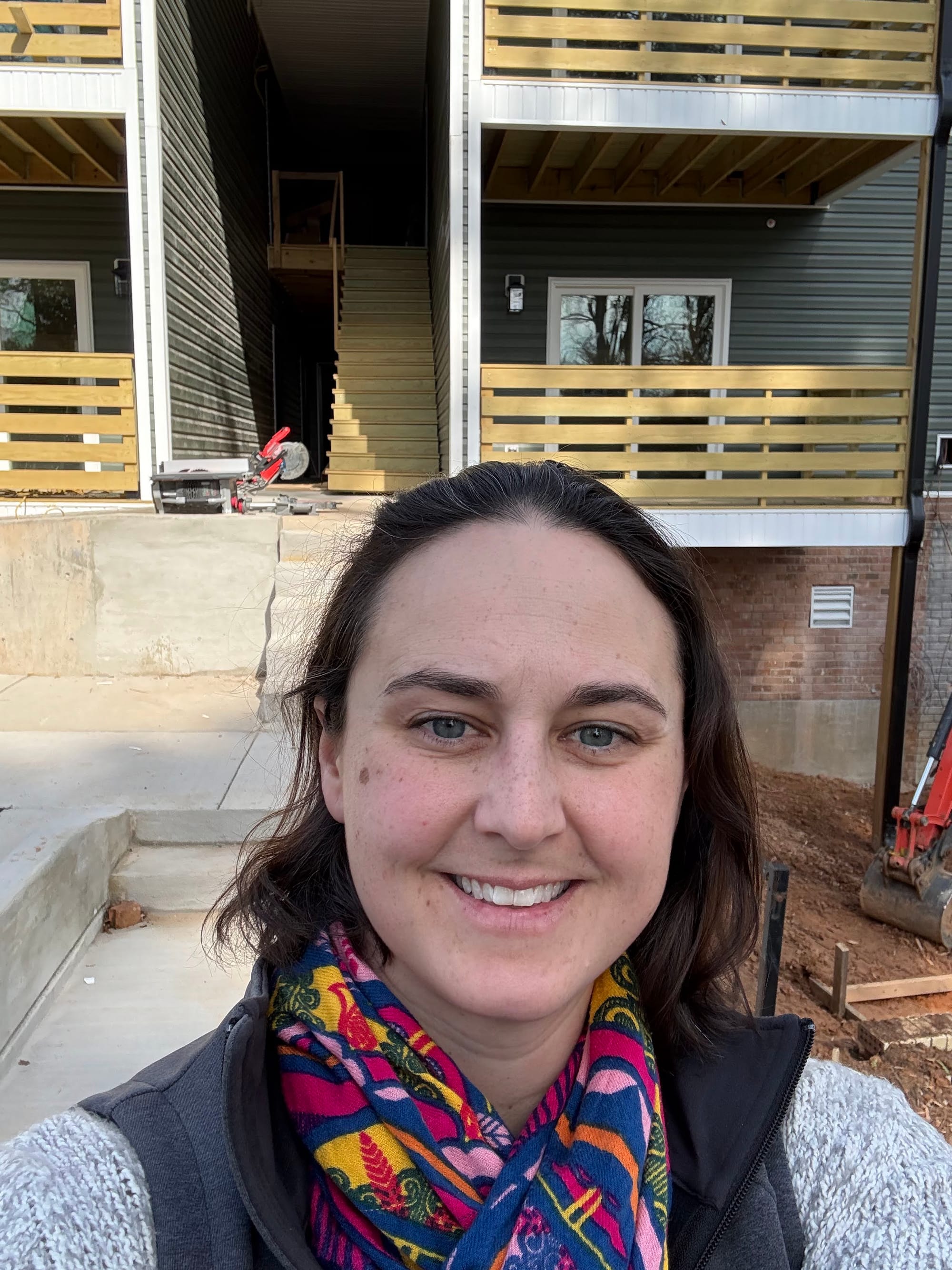
Jones' father-in-law tried to get her into real estate in the early 2010s. Around that time, he'd started buying, renovating, and renting out single family homes in working class parts of Roanoke, Virginia. It's a solid investment, he told her – a great way to earn some backup income. But Jones, a mechanical engineer who'd landed a job working on massive gas turbines for General Electric right out of college in 2008, moved to engineering giant Siemens in 2011, and spent years climbing the ranks to project manager status, didn't pay him much heed. Not only did she have solid W2 income, so did her husband, who worked in the same field.
Then in 2016, following a two-year slump in global energy markets, a wave of layoffs ripped through the gas and oil world. This strategic downsizing spared Jones and her husband. Still, it spooked them – especially as they were staring down the barrel of the birth of their first child.
"We said, 'This could happen to us at some point,'" she recalls of the mass firing spree. "'So we want to find a way to have a side gig, right?'"